

Advertiser Disclosure: Eye of the Flyer, a division of Chatterbox Entertainment, Inc., is part of an affiliate sales network and and may earn compensation when a customer clicks on a link, when an application is approved, or when an account is opened. This relationship may impact how and where links appear on this site. This site does not include all financial companies or all available financial offers. Opinions, reviews, analyses & recommendations are the author’s alone, and have not been reviewed, endorsed, or approved by any of these entities. Some links on this page are affiliate or referral links. We may receive a commission or referral bonus for purchases or successful applications made during shopping sessions or signups initiated from clicking those links. The content on this page is accurate as of the posting date; however, some of the offers mentioned may have expired.
Here are this week’s travel news headlines from around the web and interweb I found the most interesting. Take a look:
After 17 years of legal battles, a Paris appeals court reversed a 2023 acquittal and found both Air France and Airbus “solely and entirely responsible” for the crash of Flight AF447, which went down in the Atlantic Ocean en route from Rio de Janeiro to Paris on June 1, 2009. The court found that Airbus underestimated known problems with its pitot tube sensors, which iced over and caused the autopilot to disconnect, and that Air France failed to properly train its pilots for exactly that scenario. Both companies were ordered to pay the maximum corporate fine of €225,000 each. That may sound like a small number for a crash that killed 228 people, but this was a criminal manslaughter conviction, not a civil damages case. Both companies say they will appeal to France’s highest court.
This one has been working its way through the courts for years and it’s a doozy for the industry. Carnival, Royal Caribbean, Norwegian, and MSC operated Cuba sailings between 2016 and 2019 and used docks at the Port of Havana that were seized from a U.S. company called Havana Docks Corporation by Fidel Castro’s government back in 1960. The Supreme Court ruled 8-1 that the cruise lines illegally “trafficked” in confiscated property under the Helms-Burton Act, reinstating a $440 million judgment. The case now heads back to lower courts, so it’s not over yet, but this ruling is a serious blow to the industry and lands right as the Trump administration ramps up pressure on Cuba.
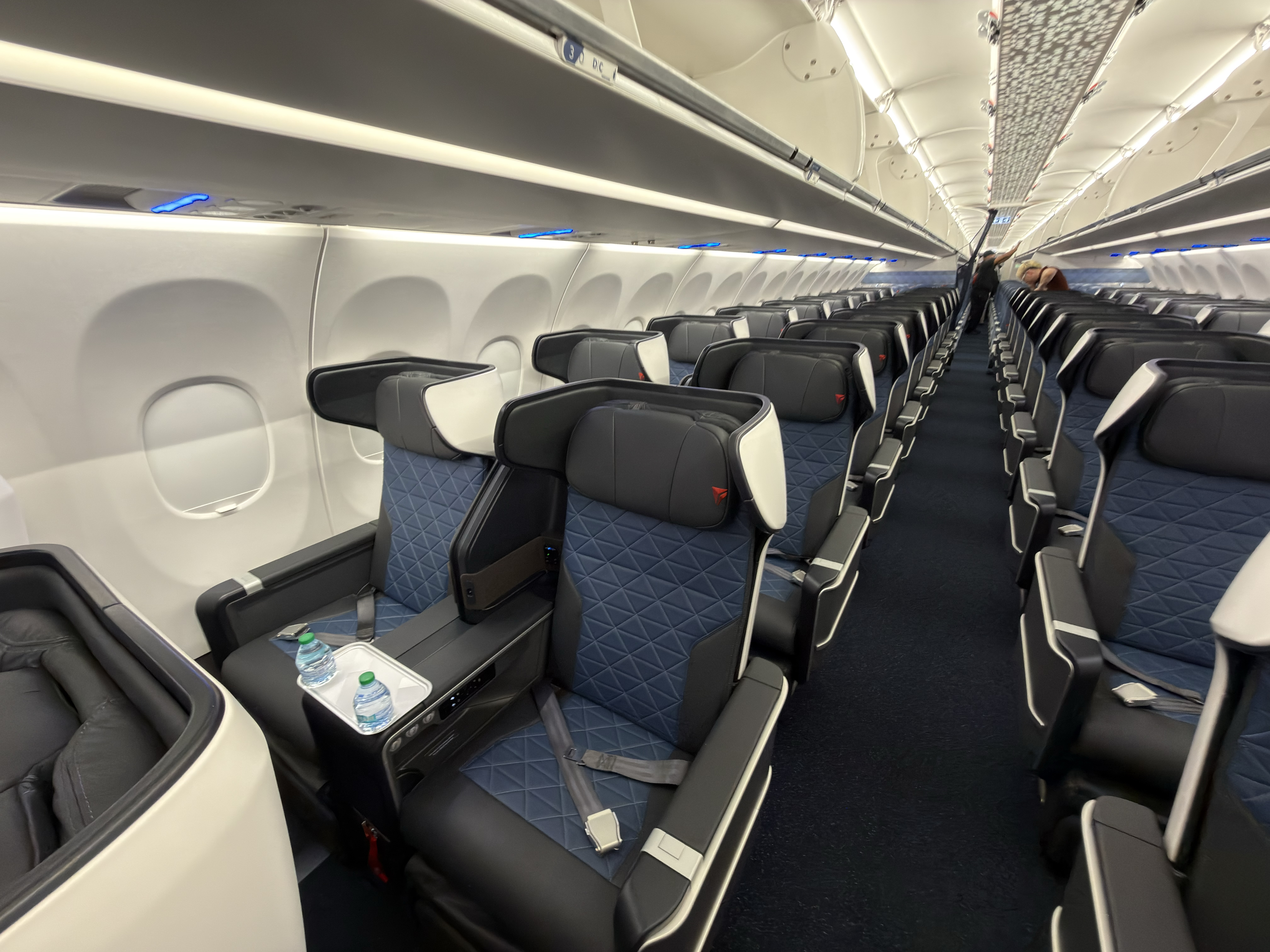
Delta debuted its unusual “3NP” configured A321neo on May 20, and the folks at AvGeeks were on the first flight. The aircraft features a staggering 44 domestic First Class seats spanning 11 rows in a 2-2 configuration — nearly double what you’d normally find on an A321neo. This temporary layout exists because Delta’s new Safran Vue lie-flat suites are stuck in FAA certification limbo, so rather than let the planes sit in storage collecting dust, Delta loaded them up with its standard domestic First recliners. The economy cabin shrank to just 66 seats as a result. Transcontinental routes from Atlanta to LA, San Francisco, Seattle, and San Diego are the lucky ones for now. As a points and miles traveler, this is genuinely exciting news if you can snag a First Class seat on one of these flights.
British Airways rolled out free Starlink Wi-Fi on its fleet and made the bold call to allow passengers to make voice and video calls during flights. The airline asks that you use headphones and keep your voice down. Conde Nast Traveller’s response to the news was essentially a polite “we beg you not to.” Honestly, same. The idea of being trapped in a metal tube at 38,000 feet next to someone on a Zoom call for six hours is… a lot. In the U.S. this is still prohibited by federal law, so American carriers are off the hook for now. But if this catches on globally, airplane etiquette may never recover.
This is important information for the large number of cruisers who are Medicare-age. Original Medicare only covers you on a cruise ship if the vessel is within U.S. territorial waters or within six hours of a U.S. port. Once you sail beyond that threshold, you’re on your own. A medical evacuation from a Caribbean ship to Florida can run $20,000 or more, and if you need a stretcher flight with a medical escort, you’re looking at $50,000 to $80,000. The article walks through which Medigap plans offer foreign travel emergency coverage and what Medicare Advantage travelers need to check before sailing. Worth a read before you head out this summer.
Barcelona mayor Jaume Collboni didn’t mince words: “I want to discourage cruise ship passengers from coming to Barcelona.” His plan is to fast-track the city’s tourist tax hike from €4 to €8 per cruise passenger per day, a move that was originally planned to roll out gradually over several years but is now being accelerated. For a ship like MSC World Europa, which carries 6,762 passengers, that’s an extra $31,500 in port fees per visit above the existing tax. Barcelona is also reducing its cruise terminals from seven to five. The city recorded 3.9 million cruise passenger visits in 2025. This is part of a broader overtourism crackdown happening across the Mediterranean, and it’s only going to get more complicated for cruise lines planning European itineraries.
The current Air Force One, the VC-25A, costs roughly $177,843 per flight hour to operate according to U.S. Air Force figures. Break that down and it’s burning nearly $3,000 every single minute it’s in the air. Trump’s recent round trip to Beijing, at approximately 15 hours each way, would have cost around $5.3 million for the aircraft alone, and that doesn’t include security deployments, support aircraft, or any of the other logistics that come with moving a sitting president across the world. The new VC-25B replacements, currently delayed until at least 2028, were supposed to modernize the fleet. In the meantime, every trip the president takes is a very expensive reminder of just how old the current jets are getting.
Costa Cruises sent a letter to guests reminding them that all food must be consumed in designated dining areas and that removing food from restaurants or the buffet to eat in your cabin, by the pool, or anywhere else onboard is strictly prohibited for hygiene and sanitation reasons. Violators face a €60 cleaning fee. Costa points out that only trained Room Service staff are authorized to bring food to your cabin. It’s a reasonable policy from a norovirus-prevention standpoint, but the bluntness of the “you will be fined” language is something. Consider yourself warned before you try to pocket a few dinner rolls.
Scott is a content creator who buys unclaimed airport luggage at auction once it’s been sitting for three months. He’s found a $1,900 Prada gilet in one bag. But he’s also opened a storage tub full of fermented fish bones that had been sitting in a silk container for 90 days in a UK warehouse. “I nearly threw up. I was gagging, it was disgusting,” he told UNILAD. Honestly fair. Someone packed that deliberately, checked it, and then just… never claimed it. The internet had a field day in the comments trying to figure out what dish it was for. This is the kind of travel story that makes you reconsider everything about checked baggage.
Were there any crazy or interesting travel news stories you found interesting that I missed? If so please drop a comment below and include a link to the story! – René
Advertiser Disclosure: Eye of the Flyer, a division of Chatterbox Entertainment, Inc., is part of an affiliate sales network and and may earn compensation when a customer clicks on a link, when an application is approved, or when an account is opened. This relationship may impact how and where links appear on this site. This site does not include all financial companies or all available financial offers. Opinions, reviews, analyses & recommendations are the author’s alone, and have not been reviewed, endorsed, or approved by any of these entities. Some links on this page are affiliate or referral links. We may receive a commission or referral bonus for purchases or successful applications made during shopping sessions or signups initiated from clicking those links.